

Imagine testing a new product before it even hits the shelves, understanding how potential customers might respond, or experimenting with multiple marketing campaigns without spending weeks conducting surveys. What once sounded like a distant possibility is now becoming a reality with AI.
Traditional market research has long relied on surveys, interviews, and focus groups to understand consumer behavior. While these methods remain valuable, they often require significant time, resources, and investment.
As Artificial Intelligence (AI) continues to evolve, businesses are discovering a new way to explore consumer insights: Synthetic Market Research. By using AI to simulate consumer profiles and generate data-driven responses, businesses can explore market trends, test ideas, and make more informed decisions.
But how does Synthetic Market Research actually work, and could it transform the way businesses understand their customers?
Synthetic Market Research is an AI-powered approach to market research that uses artificially generated consumer profiles, known as Synthetic Respondents, to simulate opinions, preferences, and potential consumer behaviors.
Rather than relying entirely on real participants, this approach uses AI technologies, including Machine Learning and Large Language Models (LLMs), to learn patterns from existing data. These may include historical survey results, customer feedback, product reviews, and consumer behavior data.
Based on these patterns, AI can generate virtual consumer profiles that represent different target audience segments.
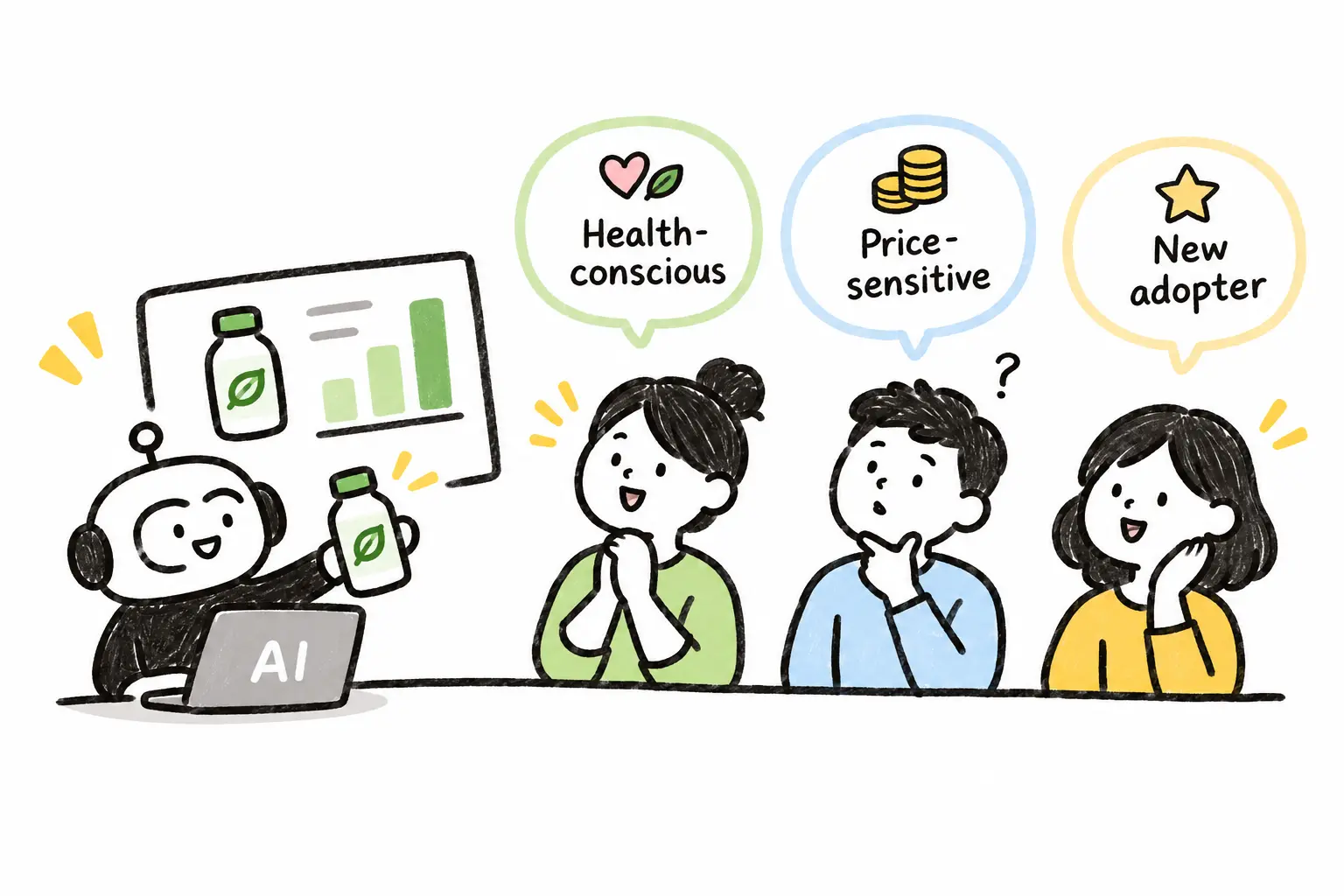
For example, imagine a beverage brand planning to launch a new health drink for working professionals. Using Synthetic AI Research, the business can simulate different consumer profiles, such as health-conscious individuals, price-sensitive customers, and early adopters who enjoy trying new products.
The brand can then test its product concept against these simulated audiences to explore how each group might respond.
However, it is important to understand that synthetic responses are AI-generated predictions, not actual opinions collected from real consumers. Their reliability depends heavily on the quality and representativeness of the underlying data.
The process of Synthetic Market Research generally involves three key steps:
The process begins with collecting relevant information about the target market, including demographic data, customer feedback, previous survey results, and purchasing behavior. AI analyzes these datasets to identify patterns and understand consumer characteristics.
AI uses the analyzed information to generate virtual consumer profiles with different characteristics, such as age, income, lifestyle, interests, and purchasing preferences. Each profile represents a potential audience segment with its own perspectives and needs.
Once the synthetic respondents are created, businesses can run different scenarios to explore potential consumer reactions. These may include testing new product concepts, evaluating advertising messages, or examining how customers might respond to different price points.
This process is often referred to as Simulation Market Research, allowing businesses to test assumptions and explore market possibilities before making real-world decisions.
So, why is Synthetic Market Research attracting attention? Beyond being an emerging AI trend, it offers several practical advantages for modern businesses.
Traditional market research requires time to recruit participants, conduct interviews, collect responses, and analyze results. Synthetic AI Research can accelerate early-stage testing by generating simulated responses, helping businesses reduce the time and resources required for certain research activities.
Instead of testing only a limited number of concepts, businesses can use AI to simulate responses to multiple product ideas, pricing strategies, and advertising messages. This allows teams to screen potential ideas before investing in real-world testing.
Synthetic respondents can represent various customer personas, helping businesses explore differences between audience segments. For example, companies can examine how Gen Z consumers might respond differently from Millennials or how purchasing preferences vary across income groups.
By analyzing simulation results, businesses can gain additional perspectives when developing product strategies, pricing models, and marketing campaigns. These insights can help teams evaluate potential opportunities and risks before taking action.
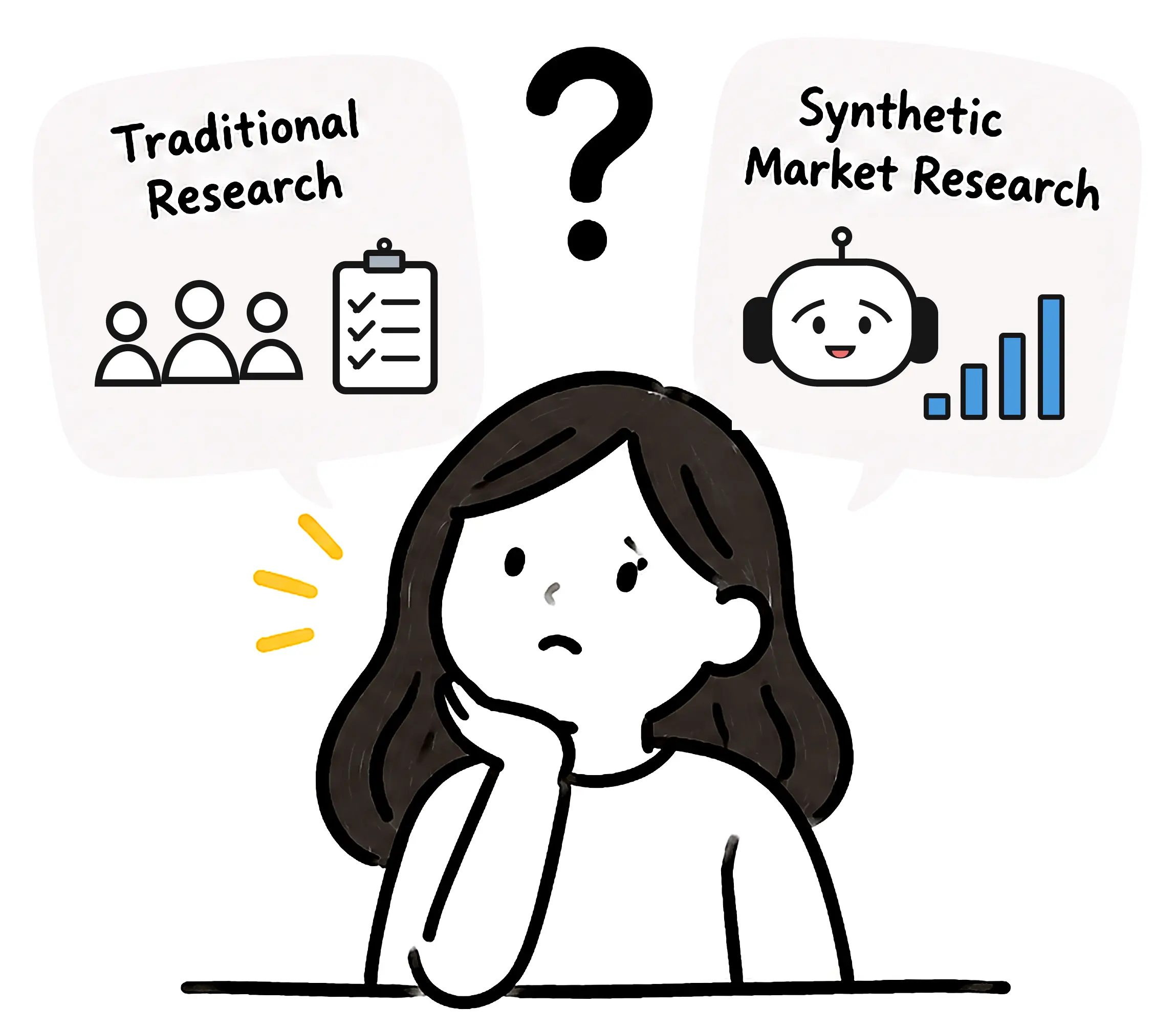
Despite its potential, Synthetic Market Research is not without limitations.
First, AI cannot fully replicate the complexity of human experiences, emotions, and decision-making. A generated response may sound realistic and logical, but that does not necessarily mean it accurately reflects how real consumers would behave.
Second, the quality of synthetic research depends on the data used to develop the AI model. Biased, outdated, or incomplete datasets may lead to misleading results, particularly when attempting to represent audiences that are underrepresented in the original data.
For these reasons, Synthetic Market Research should complement traditional research methods rather than completely replace them.
A more effective approach is to use AI simulations to explore initial ideas and test assumptions, then validate important findings through real consumer surveys, interviews, or focus groups. This combination allows businesses to benefit from AI's speed while maintaining the reliability of human insights.
As competition continues to intensify and consumer expectations evolve, the ability to understand customers and respond quickly to market changes has become increasingly important.
Synthetic Market Research represents an exciting development in this space. It offers businesses new opportunities to experiment with ideas, explore potential consumer responses, and evaluate different scenarios before making significant investments.
However, the future of market research is unlikely to be a competition between AI and humans. Instead, it will be about bringing the strengths of both together.
AI can process vast amounts of information, identify patterns, and simulate potential outcomes. Humans, on the other hand, bring real experiences, emotional understanding, and the ability to interpret insights within a broader social and cultural context.
Ultimately, AI may help businesses predict what customers are likely to think, but understanding why people think and behave the way they do remains just as important.
Q: How is Synthetic Market Research different from traditional market research?
A: Traditional market research collects information directly from real consumers through surveys, interviews, and focus groups. Synthetic Market Research uses AI to generate virtual consumer profiles and simulate responses based on patterns learned from existing data.
Q: Which industries can benefit from Synthetic AI Research?
A: Synthetic AI Research can benefit businesses across various industries, including Retail, FMCG, Technology, and Financial Services. It is particularly useful for exploring product concepts, understanding target audiences, testing marketing messages, and evaluating potential market scenarios.
Q: How accurate is Simulation Market Research?
A: The accuracy of Simulation Market Research depends on the quality of the underlying data, the AI model, and the research objectives. While it can provide valuable preliminary insights, businesses should validate important findings with real consumer data before making major strategic decisions.

เยี่ยมชมเว็บไซต์ที่เพิ่ม
ประสิทธิภาพสำหรับประเทศไทย
